Dental Bridges

Replace missing teeth with Dental Bridges in Swindon.
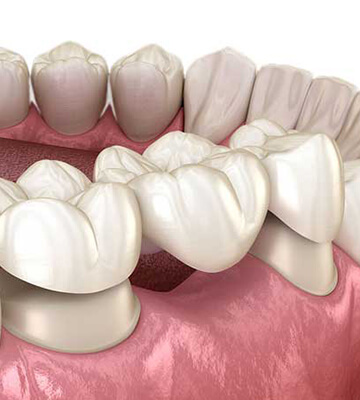
Dental bridges provide an effective method of dental restoration by essentially bridging a gap in your mouth. It involves replacing a missing tooth with an artificial tooth bonded to the natural teeth either side of the gap. Dental bridges can also be an effective, long-term alternative to partial Dentures.
A dental bridge or fixed bridge bridges the gap caused by one or more missing teeth.
Dental bridges are usually made up of dental crowns on each side of the gap, with a false tooth or even multiple teeth, which fit between. The crowns act as an anchor to hold the bridge firmly in place and can be fixed onto your natural teeth or dental implants.
These bridges can be made from porcelain, alloys, and even gold. Depending on which you choose and the gap in your teeth affects your appearance as well as the overall cost.
If you have teeth and are considering a dental bridge in Swindon, contact Victoria Road Dental & Implant Clinic to discuss the option for your individual needs.


There are three main types of dental bridges we can provide in Swindon.
Traditional bridges
They are the most common type and involve creating a crown for the tooth or implant on either side of the missing tooth, with a pontic in between.
Cantilever bridges
Which are used when there are adjacent teeth on only one side of the missing tooth or teeth.
Maryland bonded bridges
A dental bridge which is made of porcelain, porcelain fused to metal, or plastic teeth and gums supported by a metal or porcelain framework.
How long do dental bridges last?
With proper care and maintenance, dental bridges can last for 5-15 years or even longer. However, their longevity depends on factors such as oral hygiene, the patient’s overall health, and the type of bridge used.
What does a dental bridge cost?
The cost of dental bridges varies depending on the type of bridge, the materials used, and the location where the treatment is being performed. Generally, dental bridges are considered an affordable option for replacing missing teeth. To view the Dental Fee guide, please click here.
Are dental bridges painful?
The installation of a dental bridge is generally painless, although some patients may experience mild discomfort or sensitivity after the procedure. This discomfort can usually be managed with over-the-counter pain relievers.
Can dental bridges be replaced?
Yes, dental bridges can be replaced if they become damaged or worn over time. However, it is important to practice good oral hygiene and maintain regular dental check-ups to help prevent the need for replacement.
Can I eat normally with a dental bridge?
Yes, once you get used to your dental bridge, you should be able to eat and speak normally. However, it is important to avoid hard or sticky foods that can damage the bridge, particularly during the first few weeks after installation.
Can I get a dental bridge if I have gum disease?
In most cases, gum disease must be treated before a dental bridge can be installed. This is because gum disease can weaken the support structures for the bridge and increase the risk of infection. We will evaluate your oral health and recommend the appropriate treatment plan for your individual needs.