Dental Bridges
A dental bridge is an effective solution for replacing missing teeth, restoring both the function and appearance of your smile.


Dental Bridges in Swindon.
What are dental bridges?Dental bridges provide an effective method of dental restoration by bridging a gap in your mouth. A bridge replaces a missing tooth with an artificial tooth bonded to the natural teeth on either side of the gap.
Dental bridges can also be an effective, long-term alternative to partial dentures.
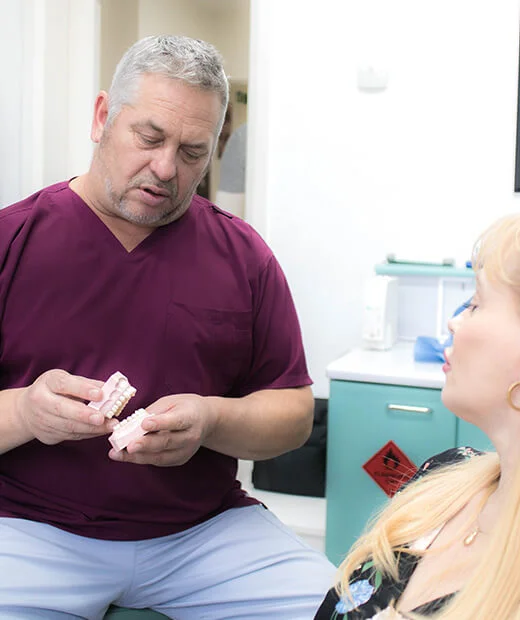
Options for multiple missing teeth.
A dental bridge, or fixed bridge, closes the gap caused by one or more missing teeth.
Dental bridges are usually made up of dental crowns on each side of the gap, with one or more false teeth fitting in between. The crowns act as anchors to hold the bridge firmly in place and can be fixed onto your natural teeth or dental implants.
Bridges can be made from porcelain, alloys or even gold. The material you choose and the size of the gap affect both the appearance and the overall cost.
There are three main types of dental bridges we can provide in Swindon:
If you are missing teeth and considering a dental bridge in Swindon, contact Victoria Road Implant & Dental Clinic to discuss the best option for your individual needs.
Frequently asked questions
How long do dental bridges last?
With proper care and maintenance, dental bridges can last for 5–15 years or even longer. How long a bridge lasts depends on factors such as oral hygiene, your overall health and the type of bridge used.
What does a dental bridge cost?
The cost of a dental bridge depends on the type of bridge and the materials used. Please see our dental fee guide for current prices.
Are dental bridges painful?
Having a dental bridge fitted is generally painless, although some patients may experience mild discomfort or sensitivity afterwards. This can usually be managed with over-the-counter pain relief.
Can dental bridges be replaced?
Yes, dental bridges can be replaced if they become damaged or worn over time. Good oral hygiene and regular dental check-ups help to prevent the need for replacement.
Can I eat normally with a dental bridge?
Yes. Once you get used to your dental bridge, you should be able to eat and speak normally. Avoid hard or sticky foods that could damage the bridge, particularly during the first few weeks after it is fitted.
Can I get a dental bridge if I have gum disease?
In most cases, gum disease must be treated before a dental bridge can be fitted, because it can weaken the structures that support the bridge and increase the risk of infection. We will assess your oral health and recommend the right treatment plan for your individual needs.
More from Victoria Road Implant & Dental Clinic
Treatments are tailored to your specific needs and requirements. We are led by you and our goal is to help you achieve the smile that you deserve.